

Grantha

A Sanskrit edition of Varāhamihira’s Bṛhatsaṃhitā accompanied by the celebrated commentary of Bhaṭṭotpala, one of the important traditional interpreters of the text. The edition provides access to the original Sanskrit verses together with traditional explanations that help clarify their meaning and context. It is a primary resource for studying Varāhamihira’s observations on astronomy, meteorology, rainfall, water, natural phenomena, architecture and other subjects, including the material relevant to Jalārgaḷaśāstra/Dakārgaḷa.

A Hindi translation of Varāhamihira’s Bṛhatsaṃhitā by Baladeva Prasād Miśra, providing access to this extensive Sanskrit compendium for Hindi readers. The translation helps readers explore Varāhamihira’s discussions of astronomy, weather, rainfall, natural signs, water resources, architecture and various aspects of human life. For the present project, it provides an important regional-language resource for understanding and studying the traditional observations and water-related knowledge preserved in the Bṛhatsaṃhitā.

Part Two of the English translation of Varāhamihira’s Bṛhatsaṃhitā by M. Ramakrishna Bhat, with explanatory notes and literary comments. Bhat’s translation provides wider access to the contents of this important Sanskrit work and assists students and researchers in examining its diverse observations and technical discussions. It is particularly useful for comparative study alongside the Sanskrit text and regional-language translations, including the portions dealing with nature, rainfall, environmental signs and traditional water-resource knowledge. Bhat’s English edition is widely catalogued as a translation with notes.

A Kannada-language presentation of Varāhamihira’s Bṛhatsaṃhitā by Dr. Śrīpāda Raghunātha Kulkarṇi. It introduces the significance of this wide-ranging classical work within the broader tradition of Jyotiṣa, while making its contents accessible to Kannada readers. The edition provides an additional regional-language resource for examining Varāhamihira’s treatment of astronomy, natural phenomena, environmental observations and related knowledge traditions. Its availability in Kannada also supports comparative study and wider dissemination of the project's research material.

A critical edition of Lōkōpakāram, the classical Kannada work attributed to Cāvuṇḍarāya, edited by H. Sesha Iyengar with an introduction. The work is an important comparative source for the study of traditional practical knowledge, covering subjects such as natural signs, architecture, agriculture, plants, medicine, astrology and, notably, water divining. Its chapter on locating underground water through plants and natural phenomena makes it especially relevant to comparative research on Dakārgaḷa/Jalārgaḷaśāstra and traditional approaches to water-resource identification.

A Marathi translation of Varāhamihira’s Bṛhatsaṃhitā by K. Janārdan Hari Āṭhālye, making the classical Sanskrit work accessible to Marathi readers. The translation opens the text to readers interested in its astronomical, environmental, scientific and cultural dimensions, including its observations concerning weather, rainfall, natural phenomena and water. As part of the project's multilingual resource collection, it provides an important basis for comparing interpretations across Indian languages and for bringing traditional knowledge of the Bṛhatsaṃhitā to a wider audience.

A Bengali translation of Varāhamihira’s Bṛhatsaṃhitā, edited by Pañcānana Tarkaratna and translated by Dhirānanda Kābyanidhi. This edition provides Bengali readers with access to one of the major Sanskrit compendia of classical India and its wide-ranging discussions of astronomy, nature, weather, rainfall, human life and traditional knowledge. It forms an important part of the project's multilingual collection, enabling comparative engagement with the Bṛhatsaṃhitā and supporting the wider dissemination of research on its environmental and water-related observations.

A Malayalam interpretation of Varāhamihira’s Bṛhatsaṃhitā, prepared by P. S. Purushothaman Namboothiri and accompanied by the Ratnaprabhā commentary. The resource provides Malayalam readers with an accessible entry into the classical text together with a traditional explanatory framework. It is valuable for studying the broader range of subjects treated by Varāhamihira and, in the context of this project, for comparative examination of traditional interpretations relating to nature, environmental phenomena, rainfall and water-resource knowledge.

Part Two of Kadalangudi’s Tamil study of Varāhamihira’s Bṛhatsaṃhitā, focusing particularly on nature, astronomy and environmental observation. The Kadalangudi tradition presents the text in a form accessible to Tamil readers and draws attention to its observations concerning celestial phenomena and the natural environment. This resource is especially useful for understanding the relationship between astronomical observation and environmental knowledge in the Bṛhatsaṃhitā, and for placing its discussions of rainfall, natural signs and water within a broader traditional knowledge framework. The Kadalangudi publication is associated with K. N. Saraswathy.
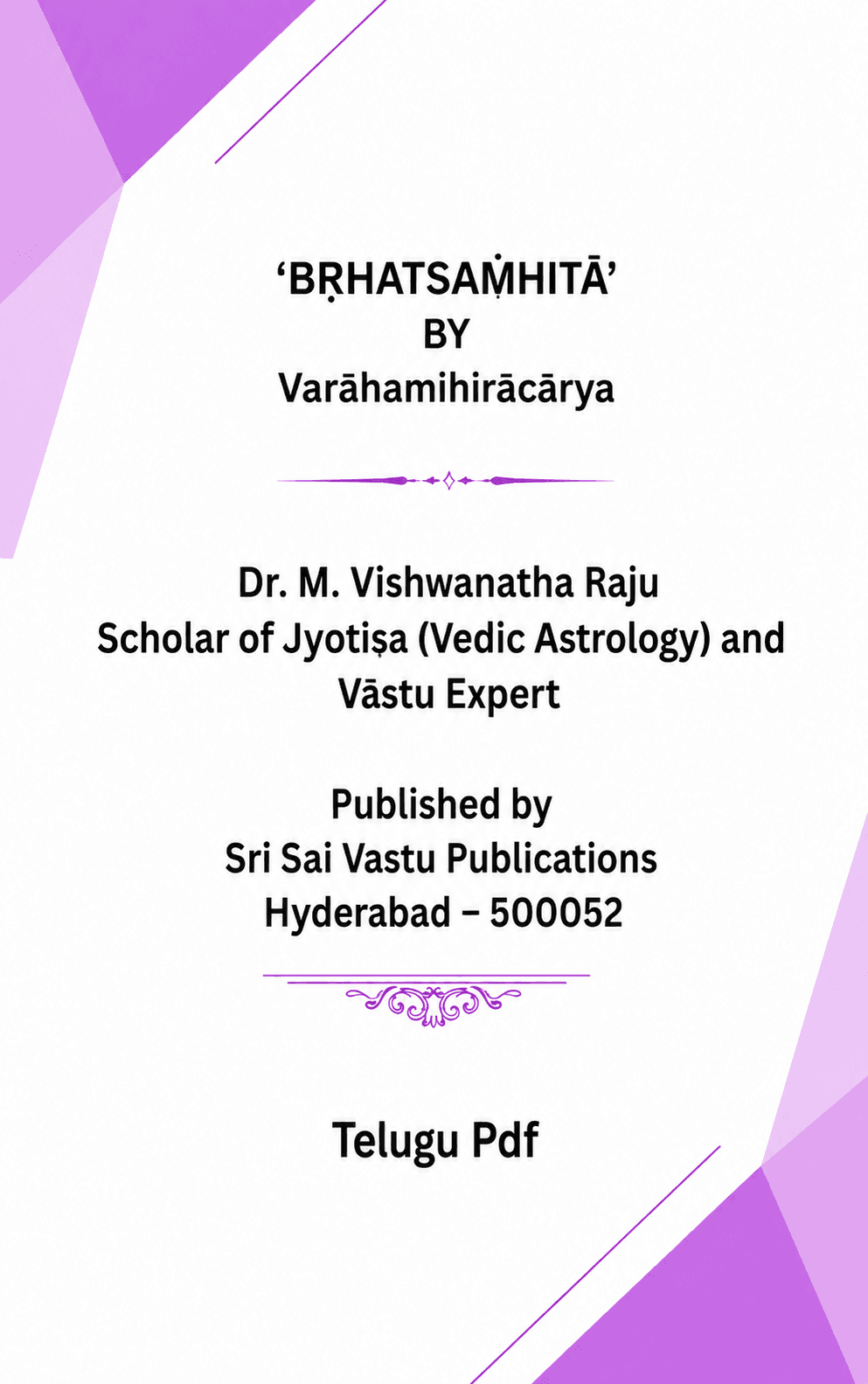
A Telugu edition of Varāhamihira’s Bṛhatsaṃhitā by Dr. M. Vishwanatha Raju, making this important Sanskrit work accessible to Telugu readers. The resource provides an opportunity to engage with the text and its wider knowledge traditions, including Jyotiṣa, Vāstu, astronomy, natural observations and environmental phenomena. As part of the project's multilingual collection, it supports comparative study of the Bṛhatsaṃhitā and helps extend the project's research and documentation on traditional water-resource knowledge to Telugu-speaking readers.